Toronto Bail Court
Guide to Toronto bail court at College Park, 444 Yonge Street. Learn about the bail hearing process, weekend and after-hours bail, surety requirements, and video bail appearances.
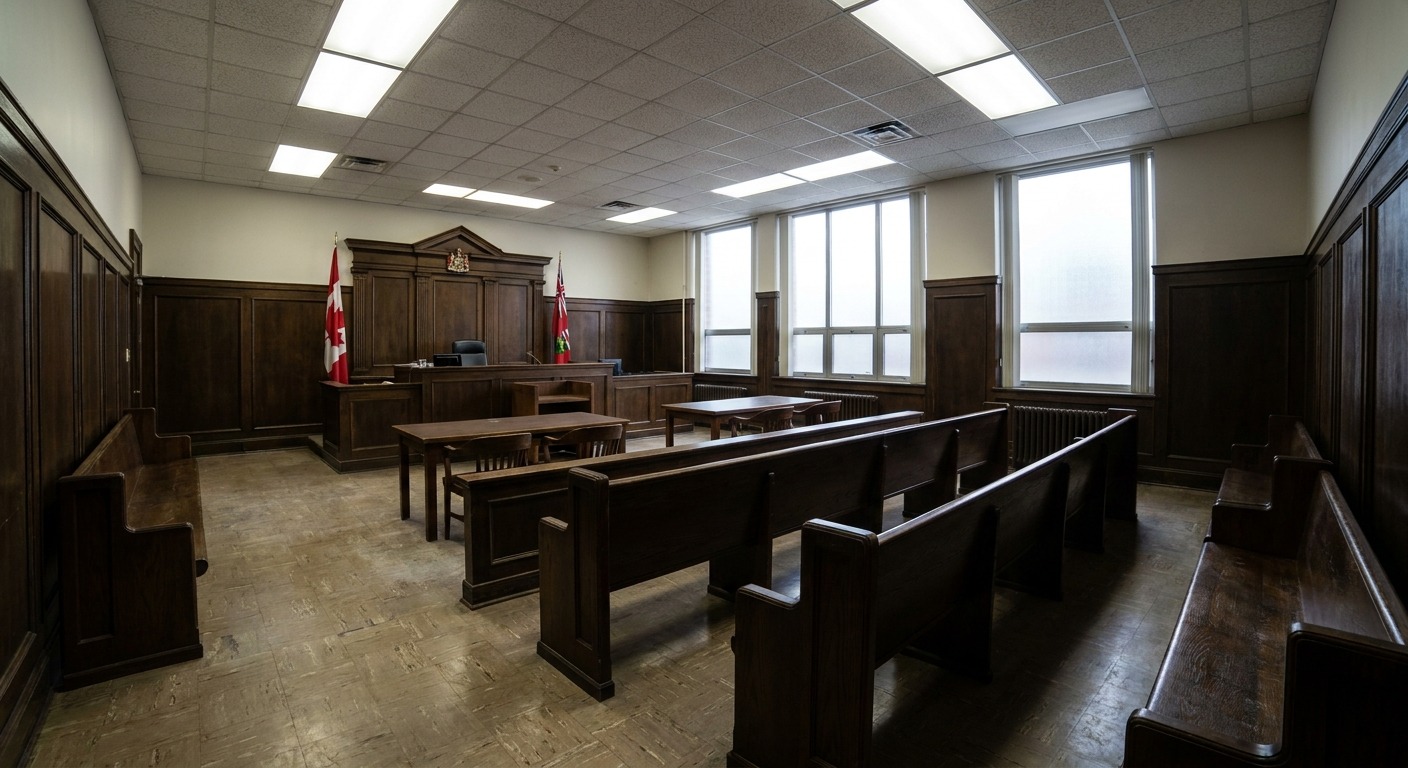
Location: College Park Courthouse
Toronto's bail court operates out of the College Park courthouse, located at 444 Yonge Street, at the southwest corner of Yonge Street and College Street (also known as Carlton Street on the east side). This location is the central bail court for the City of Toronto and handles bail hearings for persons who have been arrested and held in custody pending a bail decision.
By TTC: College Park is served by College Station on the Yonge-University subway line (Line 1), which has an exit directly adjacent to the building. The College streetcar (Route 506) also stops at the Yonge and College intersection. The location is one of the most transit-accessible courthouses in the city.
By car: Parking in the Yonge and College area is available in commercial garages, including the College Park parking garage. However, downtown parking rates are high, and the area can be congested. Transit is the most practical option for most visitors.
The courthouse entrance has security screening identical to other court locations — metal detectors and X-ray scanning for bags and personal items. All standard courthouse rules about prohibited items apply.
How Bail Court Works
When a person is arrested in Toronto and not released by police at the station, they must be brought before a justice of the peace for a bail hearing within 24 hours of arrest (or as soon as practicable). This hearing takes place at the College Park bail court.
At a bail hearing, the justice of the peace determines whether the accused person should be released pending trial and, if so, on what conditions. The Crown may oppose release on one or more of the grounds set out in section 515 of the Criminal Code:
- Primary ground: That detention is necessary to ensure the accused attends court
- Secondary ground: That detention is necessary for the protection or safety of the public
- Tertiary ground: That detention is necessary to maintain confidence in the administration of justice
For most offences, the burden is on the Crown to show why the accused should be detained. For certain serious offences — including murder, firearms offences, and offences committed while already on bail — the burden is reversed, and the accused must show why they should be released.
Bail court runs continuously throughout the day, as new arrests come in and hearings are scheduled. It is not unusual for bail matters to be heard in the afternoon or early evening, depending on when the arrest occurred and when the case is ready to proceed.
Weekend and After-Hours Bail
One of the most important aspects of Toronto bail court is that it operates on weekends and statutory holidays. The Criminal Code requires that a person held in custody be brought before a justice within 24 hours, and this obligation does not pause for weekends. If someone is arrested on a Friday evening, their bail hearing may take place on Saturday.
Weekend and holiday bail hearings are conducted by justices of the peace at College Park. The process is the same as during regular weekday hours, although the available resources — such as duty counsel and Crown preparation time — may be more limited.
After-hours arrests that occur late in the evening may result in the accused being held overnight for a bail hearing the following morning. If a person is arrested at 11:00 p.m. on a Wednesday, for example, their bail hearing will typically be scheduled for the next day's bail court sitting at College Park.
For family members: If someone you know has been arrested and is being held for a bail hearing, they will likely appear at College Park, 444 Yonge Street. Contact a criminal defence lawyer as soon as possible — having counsel present at the bail hearing significantly improves the chances of a favourable outcome. If you cannot afford a lawyer, duty counsel is available at bail court.
Surety Requirements
In many bail cases, the justice of the peace will require a surety as a condition of release. A surety is a person who agrees to supervise the accused while they are out on bail and who pledges a sum of money (or puts up real assets) that they will forfeit if the accused fails to comply with bail conditions.
Being a surety is a serious responsibility. The surety must:
- Be a Canadian citizen or permanent resident
- Have no criminal record (in most cases)
- Have the financial means to cover the amount pledged
- Be able to supervise the accused and ensure compliance with bail conditions
- Understand the obligations and potential financial consequences of the role
The surety will need to attend the bail hearing and testify before the justice of the peace about their relationship to the accused, their understanding of the charges, their ability to supervise, and their financial situation. They should bring identification and documentation showing their financial position — such as bank statements, pay stubs, a property tax assessment, or a mortgage statement.
The amount of the surety pledge varies depending on the seriousness of the offence, the accused's criminal history, and the overall risk assessment. For less serious matters, a pledge of a few thousand dollars may suffice. For more serious offences, the amount can be significantly higher. In some cases, the surety may be required to deposit cash or have a lien placed on their property.
Video Bail Appearances
Not all bail hearings at College Park are conducted with the accused physically present in the courtroom. Many bail appearances are now conducted by video, with the accused appearing from the detention facility where they are being held. Video bail is a routine part of the process in Toronto and across Ontario.
During a video bail hearing, the accused appears on a screen in the courtroom, connected by video link from the jail. The justice of the peace, Crown attorney, and defence lawyer are typically present in the courtroom at College Park. The hearing proceeds in the same way as an in-person appearance — the Crown presents its position, the defence argues for release, and any sureties testify in the courtroom.
Video bail can present practical challenges. Communication between the accused and their lawyer may be more limited, and the accused may have difficulty hearing or being heard. Defence lawyers typically arrange to speak with their client by phone before the hearing to ensure they are prepared. If you are a surety or a family member attending to support the accused, you will go to College Park in person, even if the accused is appearing by video.
For a detailed explanation of the bail process, including types of release, conditions, and what to do if bail is denied, see our comprehensive guide on how bail works in Ontario. For information about what happens next, see our guides on your first court appearance and what happens after arrest. Information about specific charges is available in our criminal charges guides.